On the occasion of International Art Nouveau Day, celebrated each year on June 10, a look at how this ornate architectural movement found its way into the most unlikely of places like coal mines, power stations, and railway yards and the long, sometimes heartbreaking battles to save what remains.

When we think of Art Nouveau, we picture sweeping ironwork, sinuous façades, and the bourgeois mansions of Brussels or Paris. But this fin-de-siècle style, with its organic lines and rejection of industrial plainness, also quietly infiltrated the factories, engine halls, and water towers of working Europe. The story of what happened to those buildings is one of neglect, near-misses, and occasionally, triumphant rescue.
A coal mine dressed for a ball
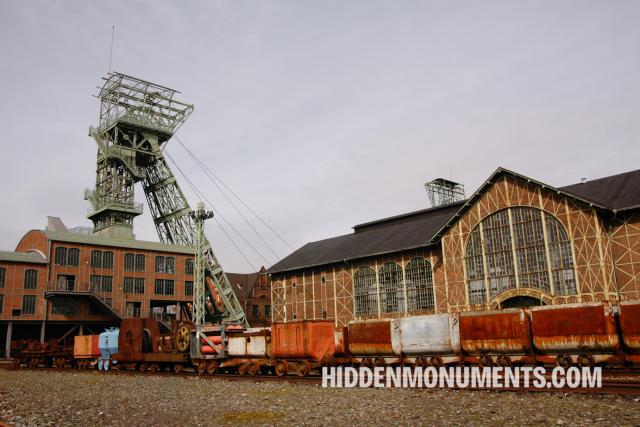
In the heart of Germany's Ruhr region, the Zeche Zollern colliery stands as perhaps the most striking example of this improbable marriage between industry and aesthetics. Its machine hall was graced with a Jugendstil portal, the German expression of Art Nouveau, a decorative flourish utterly unique among European industrial buildings.
When the mine eventually closed, demolition seemed inevitable. The hall was saved only through the determined intervention of architect Hans Paul Koellmann and the celebrated photographer couple Bernd and Hilla Becher, whose documentation of industrial heritage helped shift public attitudes toward these structures. Without them, the portal would have been rubble.
North of Aachen, in the German mining district, a steel water tower rises 49 metres above a landscape that has otherwise forgotten its industrial past. Built in 1912 by the constructor Neumann of Eschweiler, the tower once served the long-vanished Carolus Magnus colliery.
Weighing no less than 100 tonnes, it features Art Nouveau decorative elements and was crowned by a ventilation tower that resembles an oversized lantern. Its spherical tank could hold 500 cubic metres of water. Today the mine is gone, but the tower endures — a monument to an industry, and a style, that refused to be entirely forgotten.

Lisbon's power station
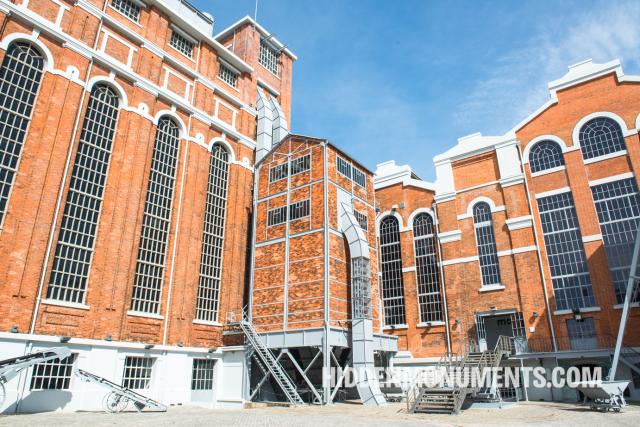
Across the Iberian Peninsula, Lisbon's Tejo Power Station presents a different kind of contrast. Its exterior is a graceful dialogue between Art Nouveau and classicism: elegant arched windows, carefully composed façades, the kind of building that invites leisurely admiration. Step inside, however, and the picture changes entirely. Behind those artistic walls, turbines, boilers, and alternators roared, filling the air with noise, dust, and suffocating heat. Beauty on the outside; inferno within.
The home of Victor Horta
No account of Art Nouveau is complete without Brussels, the movement's undisputed birthplace. It was here that Victor Horta designed the Solvay Mansion for the son of industrialist Ernest Solvay, a building now considered a masterpiece of the form. It was also here that Horta drew up plans for the Maison du Peuple, the People's House, a building that embodied the social as well as the aesthetic ambitions of the movement.
However, the Maison du Peuple did not survive. Demolished in the mid-twentieth century despite massive public protest, it became a symbol of architectural loss so acute that a reconstruction was seriously proposed. Components were numbered and documented for that purpose.
Cast-iron columns were carefully catalogued — only for more than 70 tonnes of them to be quietly sold off to a Japanese smelting furnace by an iron merchant. The salvaged facade stones spent decades in depot, before finally being stacked in 2014 in the new neighbourhood park "De Porre" in Ghent, where they now rest under the guardianship of the city's Museum of Industry (MIAT). It is not resurrection, but it is at least remembrance.

Forgotten water tower
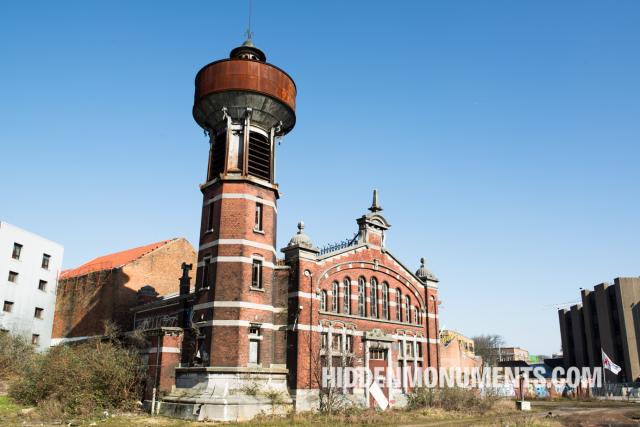
In a quiet corner of Brussels' Tour & Taxis freight station, a water tower of a very different character was built at the turn of the twentieth century to supply steam locomotives. Elegant in its Art Nouveau detailing, it was decommissioned in 1957 and, along with a neighbouring electrical substation, remained in the hands of Belgian national railway company NMBS until 2016, when both were sold to the Brussels city social welfare authority, the OCMW.
Ten years on, the Brussels government has finally granted both the water tower and the electrical substation protected status. The decision opens the door for a formal restoration programme, offering the OCMW and the City of Brussels the legal and financial framework they need to begin the work.
International Art Nouveau Day is, in part, an invitation to look beyond the famous mansions and grand hotels, to notice the water tower at the edge of a freight yard, the decorated portal of a colliery, the bones of a demolished building sleeping in a city park.
The fact that so many of these structures have survived at all, through protest, documentation, stubborn advocacy, and occasionally sheer luck, is itself a story worth telling. The fact that some are only now receiving the protection they deserve is a reminder that the fight is rarely truly over.