
Hauts-de-France
From 1905 to 1988, coal was extracted from the underground in the Charles Ledoux coal mine in Condé-sur-l'Escaut in France.
Newest articles
From 1905 to 1988, coal was extracted from the underground in the Charles Ledoux coal mine in Condé-sur-l'Escaut in France.


The Western Scheldt, the gateway to the port of Antwerp, played an essential role during World War II.
Discover more Destinations

In both Seneffe and Arquennes, traffic was guided over the Brussels-Charleroi Canal via a swing bridge.

West Flanders has never known coal mines. Yet you can still find shafts, drilling machines and other traces of miners in the West Flemish underground.

A monumental memorial was erected in 1938 on the bank of the Yser in Nieuwpoort in honour of Belgian King Albert I.

The city of Carbonia emerged in a completely remote area of Sardinia in 1938. It wasn't easy to imagine a more striking name: everything here centred around the coal mine, the first thing one sees upon entering the city.

Umlauftank 2 (UT2) is a research facility of the Technical University of Berlin that tests ship hydrodynamics, among other things.

To highlight the industrial past of the former harbour docks, the city of Ghent parked several old harbour cranes around the water, including the ST1 crane at the disused Timber Dock (or Houtdok).

You will find relics of the former railway yard Spoor Oost along the ring track around Antwerp.
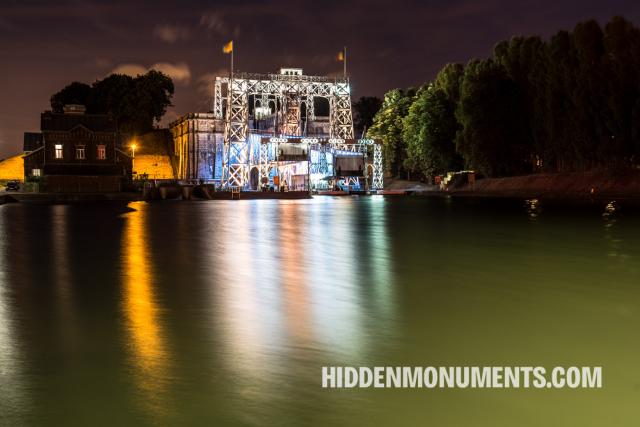
The four historic boat lifts on the Center Canal in Hainaut overcome a height difference of 68 meters between the river basins of the Meuse and the Scheldt in Belgium.

At the edge of a flooded clay pit, a rusting clay dredger recalls the mechanical mining of clay for the brick industry.
Latest from the blog

On the occasion of International Art Nouveau Day, celebrated each year on June 10, a look at how this ornate architectural movement found its way into the most unlikely of places like coal mines, power stations, and railway yards and the long, sometimes heartbreaking battles to save what remains.
All photos and stories are copyrighted. Of course, linking to articles on the site is possible and allowed.
If you would like to use photos or articles from this website, please contact bart@hiddenmonuments.com.
© 2003-2026 Hiddenmonuments.com
