
East Flanders
The cut-off meanders of the once winding Dender river form a unique nature reserve today, with this centuries-old drawbridge as the cherry on top.
Venture beyond the beaten path with our curated list of Belgium's hidden gems. From hauntingly beautiful abandoned sites to the whispers of history, this is the ultimate guide for photography lovers and history enthusiasts seeking the extraordinary. Start your unique journey now.
The cut-off meanders of the once winding Dender river form a unique nature reserve today, with this centuries-old drawbridge as the cherry on top.

Belgian 'Cement king' Martin Verbeeck (1882–1959) built an industrial empire in the Kempen region, only to see it collapse in the aftermath of the 1929 stock market crash.

A nearly 100-year-old water tower casts its shadow over the Opexquarter in the Belgian coast village of Ostend.

Before GPS, satellites and 3D scanning revolutionised land surveying, surveyors had to make do with what they had: a clear line of sight, a sharp pencil and fixed physical markers in the landscape.

The Green 62 (Groene 62) in Belgium lives up to its name. Nowhere is this more apparent than in Wijnendale, where the excavated railway bed has transformed into a verdant microcosm.

Those who stroll along the canal near the Redersplein in Brussels will encounter a striking sight: a 1923 steam locomotive perched on an abandoned railway bridge spanning the Brussels-Scheldt Sea Canal.

What at first glance appears to be a forgotten industrial remnant turns out, on closer inspection, to tell a rich story about the agro-industry along the Scheldt river in Belgium.

An idyllic little park on the banks of the Scheldt gives no hint that you are standing next to one of the most heavily polluted industrial sites in Flanders.
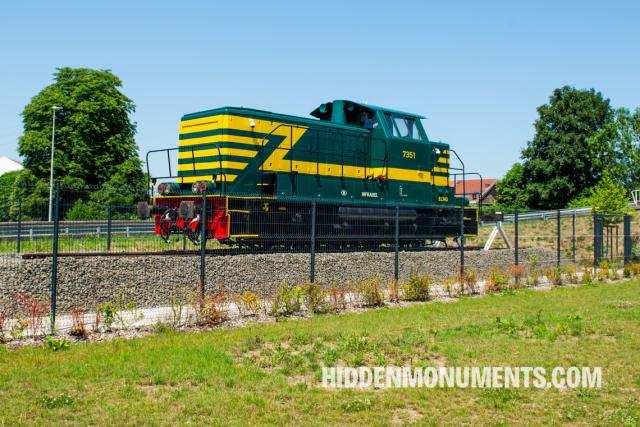
Since 2023, a shunting locomotive from the NMBS (Belgian National Railways) has stood proudly at the entrance to Ougrée's new city boulevard. Its location was no coincidence.

In a green oasis along the Rupel River, a concrete elevated walkway rises, seemingly leading nowhere, yet it still holds quite a story.
Get the latest stories straight to your inbox
Latest from the blog

On the occasion of International Art Nouveau Day, celebrated each year on June 10, a look at how this ornate architectural movement found its way into the most unlikely of places like coal mines, power stations, and railway yards and the long, sometimes heartbreaking battles to save what remains.
All photos and stories are copyrighted. Of course, linking to articles on the site is possible and allowed.
If you would like to use photos or articles from this website, please contact bart@hiddenmonuments.com.
© 2003-2026 Hiddenmonuments.com