
Antwerp
The clay pits of Terhagen in Belgium are part of a vast extraction area along the Rupel River, where clay was mined on an industrial scale throughout the 20th century for brickworks.
Explore some beautiful and disused quarries across Europe.
The clay pits of Terhagen in Belgium are part of a vast extraction area along the Rupel River, where clay was mined on an industrial scale throughout the 20th century for brickworks.

Clay pits had, from the end of the nineteenth century, taken over more than half of the territory of the hamlet of Terhagen in Belgium. After excavation, nature gradually reclaimed its space.

At the edge of a flooded clay pit, a rusting clay dredger recalls the mechanical mining of clay for the brick industry.

A ruined limestone kiln complex recalls the late-nineteenth-century exploitation of limestone at the Welsh quarry Gilwern.

Around a flooded quarry, you can still find traces of the exploitation of yesteryear, such as lime kilns, a rusted portal crane, brick tunnels and a loading quay to transport blocks of stone.

The Cul du Mont forest's flank is littered with the Linglé slate quarry's ruins.

After over fifty years of disuse, this old quarry was cleaned up and made accessible to the general public again.
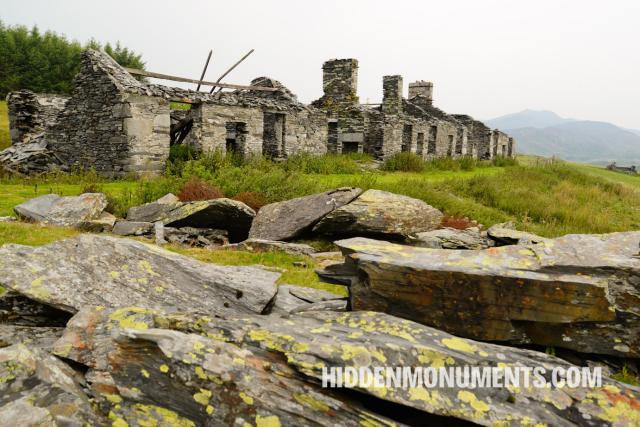
'Welsh Slate' dominated the north-west economy of Wales from 1850 onwards. Slate was exploited in dozens of quarries, such as in the smaller Rhos, on a flank of the Moel Siabod mountain in Snowdonia.


Get the latest stories straight to your inbox
Latest from the blog

On the occasion of International Art Nouveau Day, celebrated each year on June 10, a look at how this ornate architectural movement found its way into the most unlikely of places like coal mines, power stations, and railway yards and the long, sometimes heartbreaking battles to save what remains.
All photos and stories are copyrighted. Of course, linking to articles on the site is possible and allowed.
If you would like to use photos or articles from this website, please contact bart@hiddenmonuments.com.
© 2003-2026 Hiddenmonuments.com