
Hauts-de-France
The French military cemetery and monument of Notre-Dame de Lorette, close to Lens, commemorates the thousands of soldiers who lost their lives in one of the heaviest battles during World War I.
Explore Europe's hidden gems of solace and remembrance through lesser-known cemeteries and memorials, each with its own unique story of past lives, historical events, and cultural significance.
The French military cemetery and monument of Notre-Dame de Lorette, close to Lens, commemorates the thousands of soldiers who lost their lives in one of the heaviest battles during World War I.

The two 30-metre-high pylons of the Canadian War Memorial in Vimy, France, commemorate Canadian soldiers who died during World War I.
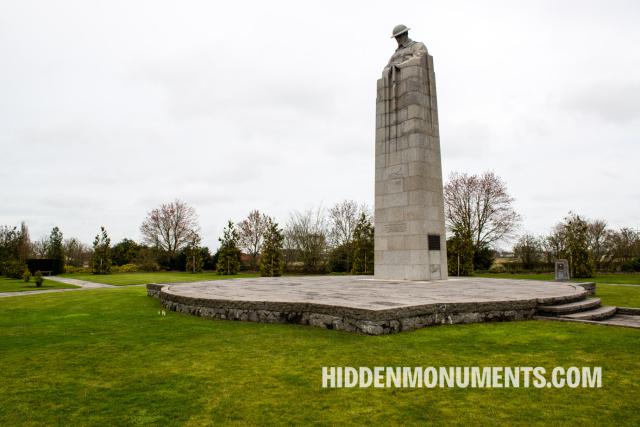
A sculpted soldier guards the Canadian Forces Memorial near the hamlet of St Julian in Langemarck-Poelkapelle since 1922.
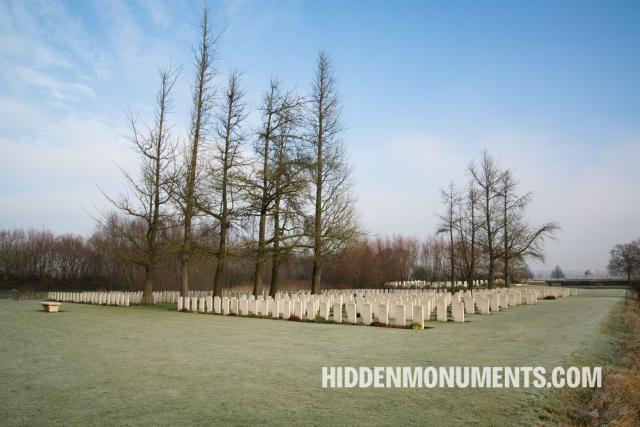
Once a country house set in lush parkland just outside Ypres, Bedford House was blown to bits during the First World War. The ruins were then used as a field hospital and brigade headquarters, among other things.
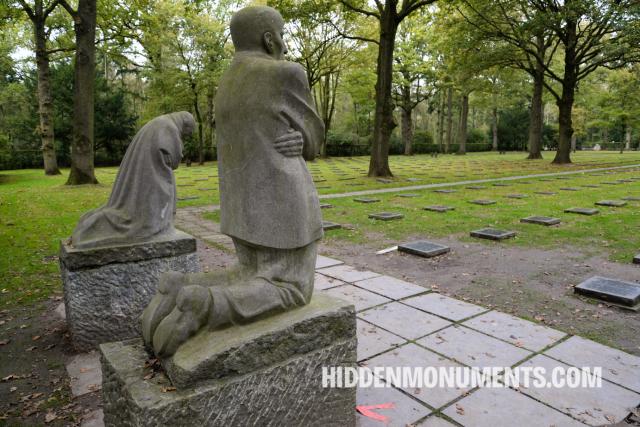
German soldier Peter Kollwitz was not yet 18 years old when he was killed on 23 October 1914 while attempting to cross the Yser near Diksmuide.

Langemark in Belgium has the dubious honor of being the place where chemical warfare made its debut: on April 22, 1915, German soldiers opened gas bottles from which 180 tons of chlorine gas hissed away. At least a thousand soldiers died in a blind panic.
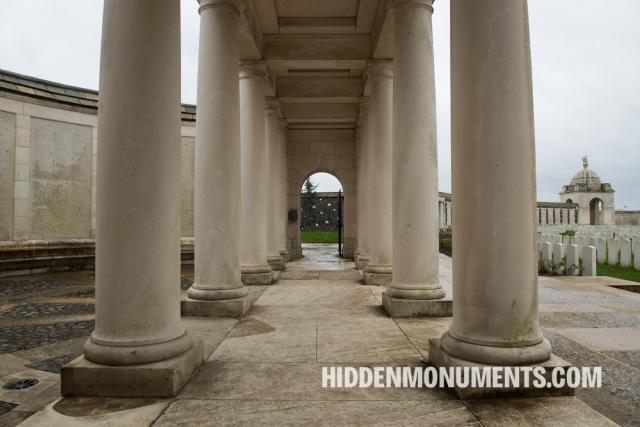
Tyne Cot Cemetery is the largest British military cemetery in continental Europe. More than 10,000 soldiers who died at the Battle of Passchendaele in 1917 during the First World War were buried in the monumental cemetery in Passchendaele.

Between 1921 and 1981, 1,750 patients of the nearby Psychiatric Hospital found their final resting place in a cemetery deep in the woods of Rekem, Belgium.

On August 8, 1956, disaster struck the Bois du Cazier mine in Charleroi, Belgium. A fire broke out hundreds of meters underground, killing 262 miners.

More than a hundred years ago, on May 12, 1917, the biplane of Count Paul de Goussencourt and Lieutenant de Cubber thundered from the sky during a firefight above Kaaskerke, a small town part of Diksmuide. Both died instantly.
Get the latest stories straight to your inbox
Latest from the blog

On the occasion of International Art Nouveau Day, celebrated each year on June 10, a look at how this ornate architectural movement found its way into the most unlikely of places like coal mines, power stations, and railway yards and the long, sometimes heartbreaking battles to save what remains.
All photos and stories are copyrighted. Of course, linking to articles on the site is possible and allowed.
If you would like to use photos or articles from this website, please contact bart@hiddenmonuments.com.
© 2003-2026 Hiddenmonuments.com