
Saarland
Thanks to its red colour, the Delbrück II headframe is a true landmark in the Saarland mining landscape.
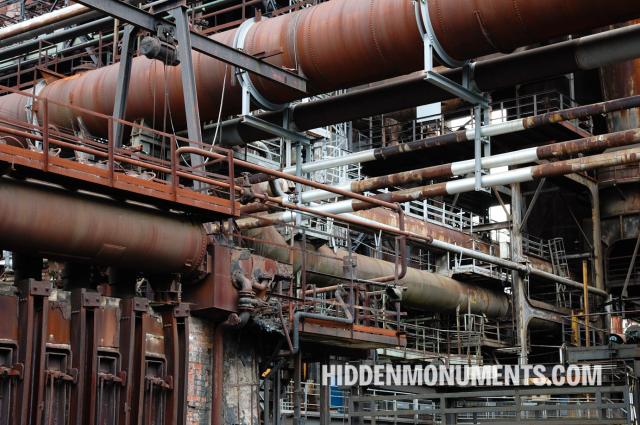
Not only did Germany's Ruhr region become an industrial giant thanks to its coal mines and steel factories, but coal and steel also took centre stage in the state of Saarland. After more than 250 years of mining, Saarland's last coal mine closed its doors in 2012. What remains are countless relics of mines and blast furnaces, such as the Völklingen Ironworks.
Thanks to its red colour, the Delbrück II headframe is a true landmark in the Saarland mining landscape.

Between 1909 and 1911, the German coal mine Camphausen was expanded with a fourth headframe in reinforced concrete, a worldwide first at the time.


At the end of the last century, coal mining in the German Saarland seemed unlimited. For example, the Göttelborn mine was expanded in 1994 with a ninety-meter-high headframe, which was then the highest in the world. Göttelborn was ready for the future.

While the Krupp family ruled the roost in the German Ruhr area, the Stumm family was in charge in the Saarland. The cradle of their steel empire was in Neunkirchen.
Get the latest stories straight to your inbox
Latest from the blog

On the occasion of International Art Nouveau Day, celebrated each year on June 10, a look at how this ornate architectural movement found its way into the most unlikely of places like coal mines, power stations, and railway yards and the long, sometimes heartbreaking battles to save what remains.
All photos and stories are copyrighted. Of course, linking to articles on the site is possible and allowed.
If you would like to use photos or articles from this website, please contact bart@hiddenmonuments.com.
© 2003-2026 Hiddenmonuments.com