
Zeeland
Anyone walking through the dunes between Groot- and Klein Valkenisse on Walcheren will come across a remarkable sight: long rows of pyramid-shaped concrete blocks shooting up out of the sand.
Explore the intriguing world of dark tourism in Europe, where history's shadows come alive. Visit sites of battles, tragedies, and mysteries, each telling a unique story of the past. Uncover the allure of exploring Europe's darker side, from haunting ruins to historic battlegrounds.
Anyone walking through the dunes between Groot- and Klein Valkenisse on Walcheren will come across a remarkable sight: long rows of pyramid-shaped concrete blocks shooting up out of the sand.

In a quiet little park just north of Vlissingen, the Netherlands, you'll stumble upon the concrete remains of a German anti-aircraft battery from the Second World War.

A German fire control post overlooking the beach at Bredene serves as a reminder of the large-scale defensive works of the Second World War.

A graceful arch bridge, a kilometres-long railway tunnel, and several pedestrian bridges still recall a railway line in France from the 1930s that was never completed.
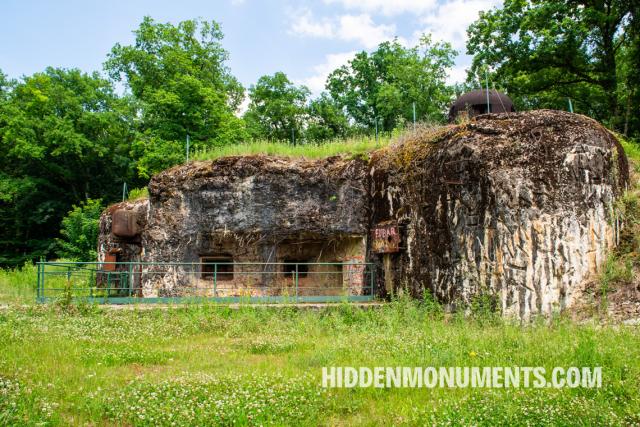
In the French Moselle, a modest infantry work was built in the early 1930s to protect France against a new German invasion.

During the Second World War, the historic naval harbour of Hellevoetsluis in South Holland grew into an essential stronghold within the Atlantic Wall, the 5,000-kilometre-long coastal defence system of Nazi Germany.

For more than half a century, you’ve been able to cross the Kempen Canal near Geel via a Bailey bridge, a temporary bridge developed for military purposes during World War II.

Aircraft development in Germany gained momentum after Adolf Hitler came to power in early 1933.

Organisation Todt, Nazi Germany's construction company, sent an army of forced labourers to an old marl quarry in the Netherlands in the spring of 1944 to convert it into an aircraft engine maintenance site.

The fortified town of Bitche is dominated by a citadel stretching out over a sandstone rock.
Get the latest stories straight to your inbox
Latest from the blog

On the occasion of International Art Nouveau Day, celebrated each year on June 10, a look at how this ornate architectural movement found its way into the most unlikely of places like coal mines, power stations, and railway yards and the long, sometimes heartbreaking battles to save what remains.
All photos and stories are copyrighted. Of course, linking to articles on the site is possible and allowed.
If you would like to use photos or articles from this website, please contact bart@hiddenmonuments.com.
© 2003-2026 Hiddenmonuments.com