
Ghent
A row of stones divides the neighbourhood park "De Porre" in Gentbrugge. Looking a little closer, you soon see that some stones are numbered, and others have a rather elegant shape. This is more than just a pile of old stones.
Things-to-do in East Flanders, nearby Ghent.
A row of stones divides the neighbourhood park "De Porre" in Gentbrugge. Looking a little closer, you soon see that some stones are numbered, and others have a rather elegant shape. This is more than just a pile of old stones.

To highlight the industrial past of the former harbour docks, the city of Ghent parked several old harbour cranes around the water, including the ST1 crane at the disused Timber Dock (or Houtdok).

The "Houtdok" (or timber dock) was repurposed in 2015. This harbour dock was dug out around 1880 to load and unload timber.

To train pilots to fly fighter jets, US aircraft manufacturer Lockheed built the T-33 Shooting Star in 1948, a training aircraft also used by the Belgian Air Force.

A 20-metre-high harbour crane casts its shadow over the new Matadi Bridge at the Handelsdok in Ghent. The crane, designed in 1988 by the Belgian firm Sobemai of Maldegem, casts its shadow over the new bridge.

Two axle trams, PCC trams, horse-drawn carriages or steam trams: historic tram carriages crossed the city center of Ghent to mark 150 years of trams.

The polder village of Doel is located on the left bank of the river Scheldt and is surrounded by the Doel nuclear power plant and the Deurganck container dock that was put into use in 2005.

After the Second World War, the acrobats and horses in the Ghent Winter Circus made way for the out-of-control classic car collection of the Mahy car garage. After more than 20 years of vacancy, the Ghent circus was renovated.
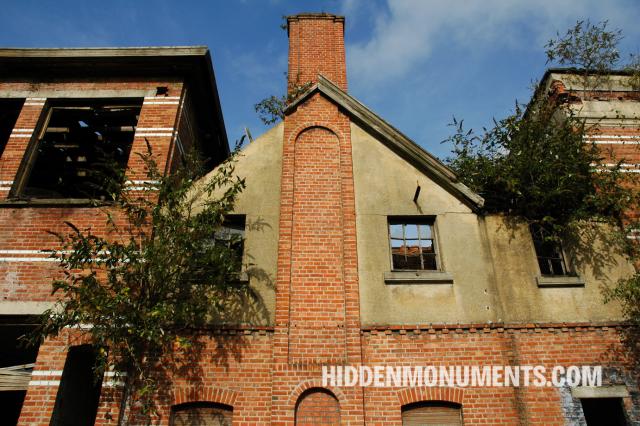
The Alsberge-Van Oost bleaching plant was founded in 1879. A century later, it collapsed and was left vacant for years.
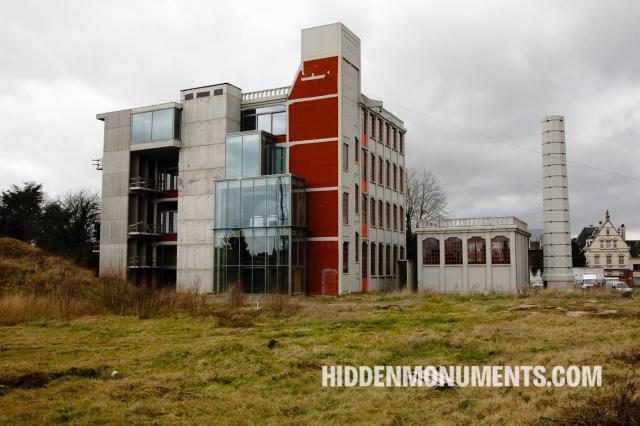
Over the course of the twentieth century, the Sanitary Underwear Company emerged as the second-largest textile factory in Zottegem, East Flanders.
Get the latest stories straight to your inbox
Latest from the blog

On the occasion of International Art Nouveau Day, celebrated each year on June 10, a look at how this ornate architectural movement found its way into the most unlikely of places like coal mines, power stations, and railway yards and the long, sometimes heartbreaking battles to save what remains.
All photos and stories are copyrighted. Of course, linking to articles on the site is possible and allowed.
If you would like to use photos or articles from this website, please contact bart@hiddenmonuments.com.
© 2003-2026 Hiddenmonuments.com