
Antwerp
The steel lifting bridge above the Brussels-Scheldt sea canal is part of the legacy of the Société Anonyme des Ateliers de Construction de Willebroeck, once an internationally renowned constructor.
Discover Europe's rich industrial heritage with a journey through its historic sites. From towering steel mills to repurposed factories, explore the monuments to innovation and the legacy of the Industrial Revolution.


The Industrial Revolution is not only the story of coal and steel, but also of the mechanization of the textile industry. In 1779, the English inventor Samuel Crompton built the Mule Jenny, a semi-automatic machine which spun yarn.
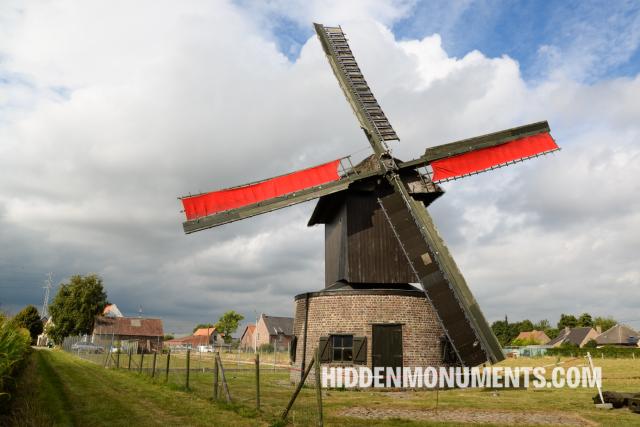
Of the eight flax mills that Heule once had, only Preetjesmolen remains. This flax winding mill was built between 1859 and 1870 on behalf of farmer Ivo Deprez, hence the name Preetjesmolen ("Deprez' Mill").

The former freight stations of the Potsdamer and the Anhalter Bahn on the banks of the Landwehrkanal in Berlin were merged in 2011 and redesigned as a city park: the Park am Gleisdreieck. That does not mean that all railway heritage has been brushed away.

A Monnoyer-type water tower stands in the shadow of the headframe and compressor building of the Helchteren-Zolder mine.

The "Molens van Orshoven" is the oldest preserved mill complex on the Leuven Vaartkom and withstood bombardments during both World Wars.

On Monday, January 1, 1872, the canal between the Leie and Roeselare was opened to shipping traffic. However, plans to extend the canal to Ostend or Nieuwpoort remained a dead letter.

Brick transformer houses sprang up like mushrooms over the twentieth century in Belgium to supply every corner of the country with electricity.

The Brothers of Charity built a new institution and school complex in Zwijnaarde around 1830, specifically with the Medical Pedagogical Institute Sint-Jozef.
Get the latest stories straight to your inbox
Latest from the blog

On the occasion of International Art Nouveau Day, celebrated each year on June 10, a look at how this ornate architectural movement found its way into the most unlikely of places like coal mines, power stations, and railway yards and the long, sometimes heartbreaking battles to save what remains.
All photos and stories are copyrighted. Of course, linking to articles on the site is possible and allowed.
If you would like to use photos or articles from this website, please contact bart@hiddenmonuments.com.
© 2003-2026 Hiddenmonuments.com