
Namur
In the early twentieth century, a water tower was erected near the Treignes border station to supply the steam locomotives running between Charleroi and the French border.
Discover Europe's rich industrial heritage with a journey through its historic sites. From towering steel mills to repurposed factories, explore the monuments to innovation and the legacy of the Industrial Revolution.
In the early twentieth century, a water tower was erected near the Treignes border station to supply the steam locomotives running between Charleroi and the French border.

Mariembourg station, today the terminus of railway line 132 between Charleroi and the Belgian-French border, has a spacious water tower in store.
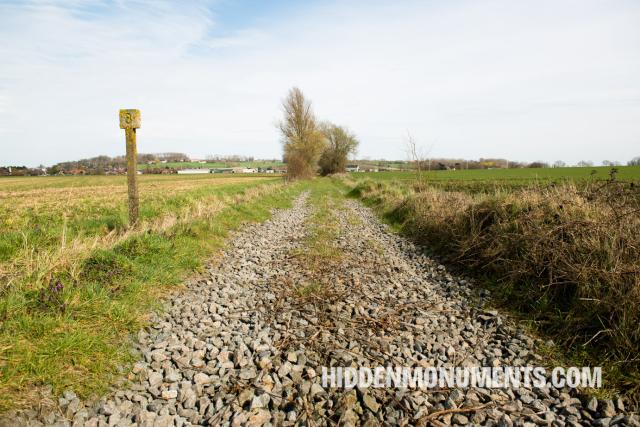
The Koppenberg in the Flemish Ardennes is not only the setting of the Tour of Flanders but also forms the background of railway line 85 between Leupegem and Herseaux near the French border.

The ten-kilometre-long railway line 102 cut through the Borinage and connected several coal mines between Saint-Ghislain and Frameries.

On the eve of the Second World War, the former petroleum port of Antwerp was equipped with a brand new network of above-ground pipelines.
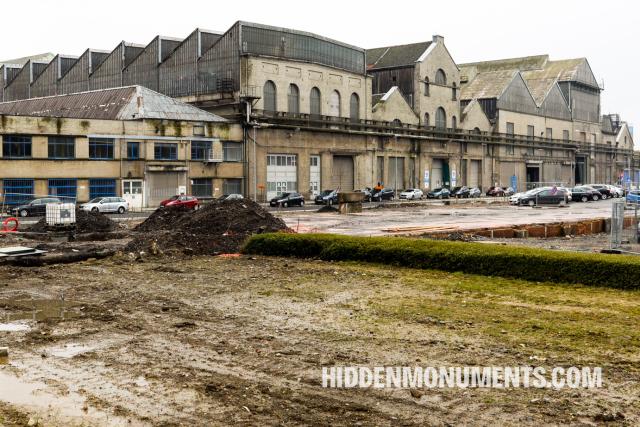
The Prince-Bishop's Palace of Seraing hides the former workshops of the Cockerill company.

In the valley of the Meuse, squeezed between railway line 125 and the river itself, lies a brick ensemble built in 1901 on behalf of Les Moulins de Namur et de Jambes.

In the 1960s, Flanders had its first steel factory along the Ghent-Terneuzen canal. There, Sidmar (Sidérurgie Maritime) rose from the ground. Today, it is the home of the only active blast furnaces in Belgium.
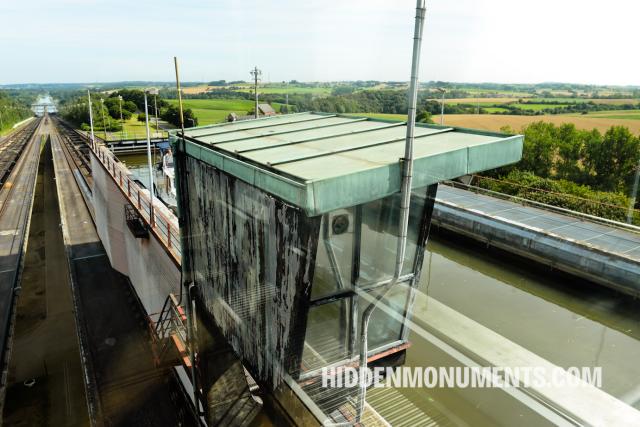
The Ronquières Inclined Plane spans 68 meters and thus replaces sixteen locks on the canal between Brussels and Charleroi.

Neither the city of Charleroi nor the Walloon Region wants to release the money to maintain blast furnace 4 in Marchienne-au-Pont and preserve it for future generations.
Get the latest stories straight to your inbox
Latest from the blog

On the occasion of International Art Nouveau Day, celebrated each year on June 10, a look at how this ornate architectural movement found its way into the most unlikely of places like coal mines, power stations, and railway yards and the long, sometimes heartbreaking battles to save what remains.
All photos and stories are copyrighted. Of course, linking to articles on the site is possible and allowed.
If you would like to use photos or articles from this website, please contact bart@hiddenmonuments.com.
© 2003-2026 Hiddenmonuments.com