
Hauts-de-France
The German army misled the Allies by building a fire control post near Oye in the shape of a church tower.
Explore key World War II sites across Europe, from historic battlefields to poignant memorials.
The German army misled the Allies by building a fire control post near Oye in the shape of a church tower.

From September 1943, forced labourers excavated a vast underground tunnel complex in Mimoyecques on the outskirts of Calais.

One of the dunes of Blériot-Plage, west of Calais, was crowned with a command post in the autumn of 1943. The coastal batteries of Waldam, Oldenburg, Bastion II, Fort Lapin, Sangatte and Lindemann were controlled from here.

During the Second World War, the Germans built an observation bunker between Zuydcoote and Leffrinckoucke on top of the dunes.

Like the capital, Berlin, the German port city of Hamburg was fortified with two concrete Flak Towers ('Flaktürme' in German) between 1942 and 1944.

On the night of April 25 to 26, 1940, the British Royal Air Force bombed the German capital Berlin. For Nazi leader Adolf Hitler, it was unpalatable to have bombs hit the capital of his Third Reich.

In the run-up to the Second World War, Adolf Hitler ordered the construction of a defense line in the west of the country, the so-called West Wall. You will still find hundreds of meters of tank barriers in Aachen, Germany.

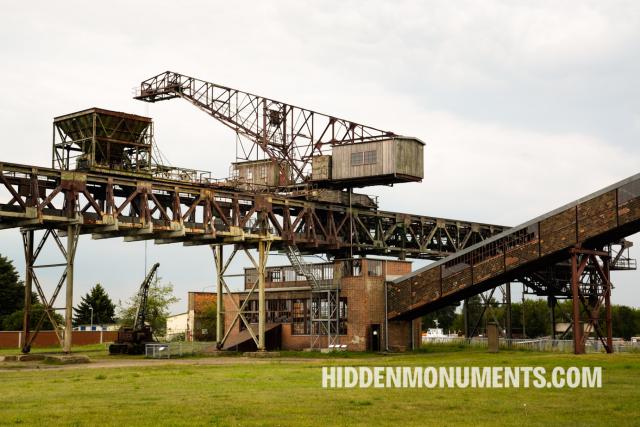
In Peenemünde, Germany, the Nazi rocket testing center, a coal-fired power plant was established in 1939 to enable the energy-intensive production of liquid oxygen - the fuel for the V2 rocket.
Get the latest stories straight to your inbox
Latest from the blog

On the occasion of International Art Nouveau Day, celebrated each year on June 10, a look at how this ornate architectural movement found its way into the most unlikely of places like coal mines, power stations, and railway yards and the long, sometimes heartbreaking battles to save what remains.
All photos and stories are copyrighted. Of course, linking to articles on the site is possible and allowed.
If you would like to use photos or articles from this website, please contact bart@hiddenmonuments.com.
© 2003-2026 Hiddenmonuments.com