
Grand Est
Anyone following the winding footpath through this protected nature reserve unwittingly steps into a fascinating, but forgotten chapter of industrialisation.
Explore over 600 destinations previously published in the archive. Premium members unlock the full story for each destination, GPS coordinates, addresses, heritage maps, and tips for legal visits.
Anyone following the winding footpath through this protected nature reserve unwittingly steps into a fascinating, but forgotten chapter of industrialisation.

Even though the curtain fell on the United Textile Mills (Verenigde Textielfabrieken or Vetex) in Kortrijk over 30 years ago, the company name still graces the streetscape

A concrete water tower still testifies to the ultimate attempt by a group of West Flanders flax companies to secure sufficient water to sustain flax production.

Neutral Moresnet was a mini-state on the border with Belgium for over a century, with the zinc company Vieille Montagne exercising control there.

In 1937, steel company S.A. d'Ougrée-Marihaye established its central workshops in Ougrée, Belgium. The workshops were strategically located on a railway line between the former Ougrée coking plant and the extinguished Blast Furnace B.

Aircraft development in Germany gained momentum after Adolf Hitler came to power in early 1933.

The northern French town of Valenciennes had more in store than steel and coal. The glass industry also had its heyday there.

At the end of the 19th century, the Cotonnière du Touquet settled in the northern French textile town of Tourcoing.
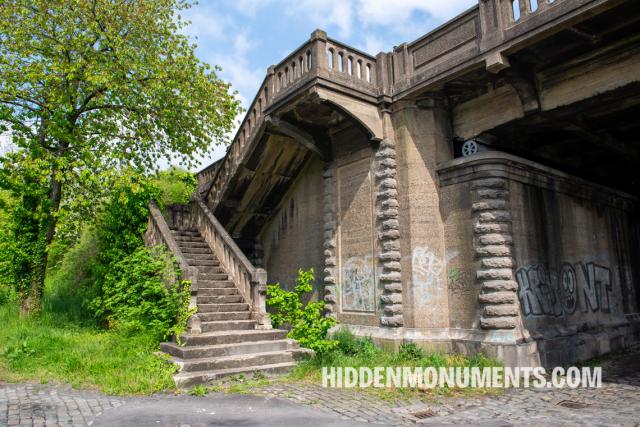
For over a century, a graceful concrete bridge has stood above the railway tracks near Mouscron station in Belgium

To dispose of blast furnace slag from the Dudelange iron and steelworks, the company utilised a series of slag wagons provided by the German firm Jünkerather Gewerkschaft.
Get the latest stories straight to your inbox
Latest from the blog

On the occasion of International Art Nouveau Day, celebrated each year on June 10, a look at how this ornate architectural movement found its way into the most unlikely of places like coal mines, power stations, and railway yards and the long, sometimes heartbreaking battles to save what remains.
All photos and stories are copyrighted. Of course, linking to articles on the site is possible and allowed.
If you would like to use photos or articles from this website, please contact bart@hiddenmonuments.com.
© 2003-2026 Hiddenmonuments.com