
Flemish Brabant
During the heyday of coal mining, cable winches were standard equipment in every coal mine. Such a winch was used, for example, to install the steel elevator cables.
During the heyday of coal mining, cable winches were standard equipment in every coal mine. Such a winch was used, for example, to install the steel elevator cables.

The invention of the Bessemer process in 1856 made large-scale steel production possible, heralding the start of the Second Industrial Revolution.

In 1941, the National Local Railway Company (NMVB) built a bridge over the Gete for tram traffic between Sint-Truiden and Tienen.

Mobile anti-tank barriers, known as Cointet elements, formed the backbone of the Belgian KW line erected in 1939 to prevent a German invasion.

In 1939, construction of a 50-kilometre defence line between Koningshooikt and Wavre, known as the KW-Line, began on behalf of the Belgian army.

Almost five thousand kilometres of tracks, 45 major bridges, tunnels, turntables, weighbridges, countless stops all over the country and spacious depots with water towers, warehouses and tram sheds. The Belgian National Company of Light Railways constructed this widespread tram network from 1885 onwards.
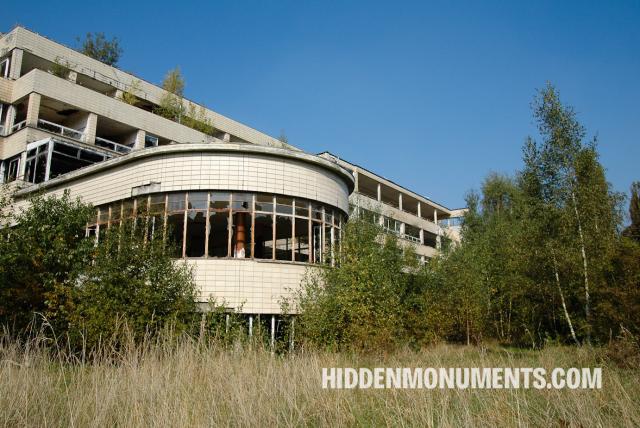
The Joseph Lemaire sanatorium in the Belgian town of Overijse is one of the most famous modernist sanatoriums in the world.


There is no shortage of famous residents in the Prince's Castle of Grimbergen, such as the Princes of Grimbergen, the noble family de Mérode, Van Glymes, and Van der Aa.
Get the latest stories straight to your inbox
Latest from the blog

In Italy, the 25th Olympic Winter Games are getting underway. One of the most spectacular disciplines in the Games since the very beginning is ski jumping.
All photos and stories are copyrighted. Of course, linking to articles on the site is possible and allowed.
If you would like to use photos or articles from this website, please contact bart@hiddenmonuments.com.
© 2003-2026 Hiddenmonuments.com