
Liège
Slender columns with Corinthian capitals support a canopy in glass and iron above the platforms of Pepinster station.
Discover Europe's rich industrial heritage with a journey through its historic sites. From towering steel mills to repurposed factories, explore the monuments to innovation and the legacy of the Industrial Revolution.
Slender columns with Corinthian capitals support a canopy in glass and iron above the platforms of Pepinster station.

On 24 November 1897, the entire municipality of Hamme was in a celebration mood. That day, the foundation stone was to be laid for a new bridge over the Durme. But it ended in tragedy.

Fosse Mathilde is one of the oldest preserved mining buildings in the northern French mining basin. The brick complex was built in 1831. The Compagnie des Mines d'Anzin mined coal there until 1862.
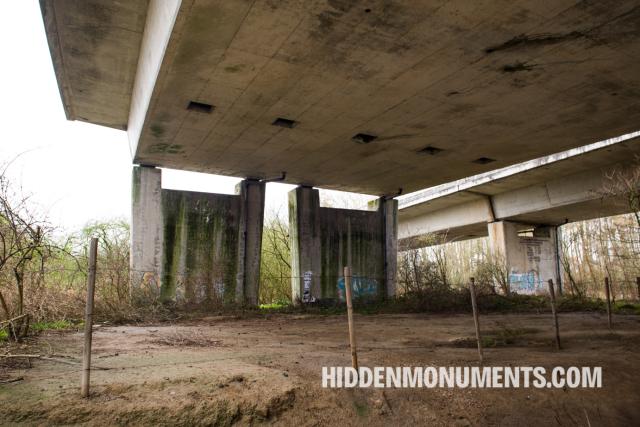
The ring road R8 around the Belgian town of Kortrijk has been awaiting completion for decades. Construction of this ring road around the city began more than 50 years ago, in 1973.

Verviers, the Belgian capital of the wool industry, had dozens of spinning mills, weaving mills, bleaching mills, cloth manufacturers and so-called conditioning buildings, the first stop for the wool delivered to the city.

A 180-year-old tunnel still recalls the Verviers-West head-end station on the railway line between Liège and the border with the German city of Aachen.

The Wiedauwkaai bridge over the canal-Terneuzen is a swing bridge that allows passenger traffic over the railway line between Ghent and Eeklo and freight transport towards the Kluizendok.

Today, three historic shipyards along the Scheldt in Baasrode host the Provincial Heritage Site Shipyards Baasrode. The vast industrial heritage site tells the story of the rise and fall of shipbuilders along the Scheldt.

A 30-metre rocket twinkles in the front yard of the Euro Space Center in Redu. But what is it doing there, rather than in space?

The French mining company Compagnie des mines de Vicoigne-Noeux-Drocourt pulled out all the stops in 1886 when it modernised its mining headquarters in Noeux-les-Mines.
Get the latest stories straight to your inbox
Latest from the blog

On the occasion of International Art Nouveau Day, celebrated each year on June 10, a look at how this ornate architectural movement found its way into the most unlikely of places like coal mines, power stations, and railway yards and the long, sometimes heartbreaking battles to save what remains.
All photos and stories are copyrighted. Of course, linking to articles on the site is possible and allowed.
If you would like to use photos or articles from this website, please contact bart@hiddenmonuments.com.
© 2003-2026 Hiddenmonuments.com