
Ghent
No fewer than 712 steam engines rolled off the production line at the Carels Frères construction workshop (later ACEC) in the Belgian town of Ghent between 1874 and 1914.
Things-to-do in East Flanders, nearby Ghent.
No fewer than 712 steam engines rolled off the production line at the Carels Frères construction workshop (later ACEC) in the Belgian town of Ghent between 1874 and 1914.

The park of Lede in East Flanders has been the base of the Lords of Lede since 1200. They had a spacious castle built there and were promoted in 1633 when they were given the title of marquis.

In just a few years, the Schipperskaai, a traffic-free walking and cycling promenade, has undergone a true metamorphosis with the construction of a new urban district.


The Bijgaardehof, the former place where monks of St. Bavo's Abbey grew bees during the Middle Ages, was buried under the buildings of the Baertsoen-Buysse spinning mill at the end of the nineteenth century.
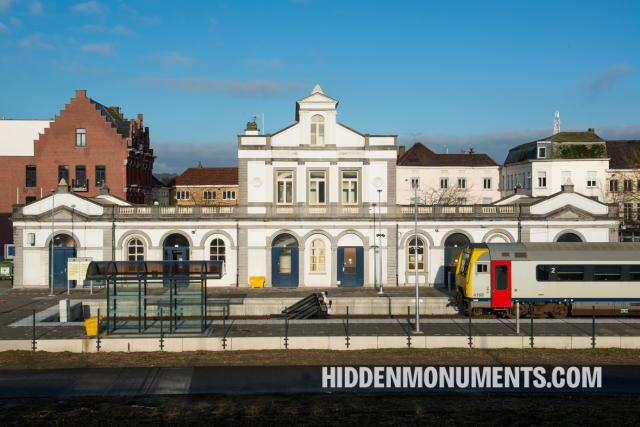
The Belgian Ronse station is today the terminus for trains from Ghent, but until the mid-twentieth century, it was a junction of four different railway lines.
Spinning mills, weaving mills, dyers and twisting mills: in the Belgian town of Ronse, you stumble over the remains of the textile past.

Between 1885 and 1892, a new port project rose from the ground along the Ghent-Terneuzen canal. Ghent's chief engineer and later mayor, Emile Braun, designed the harbour sheds.


A blue harbour crane dominates Dock North. Built in 1973 by Boom Metalworks, it was the last crane installed at the Handelsdok.
Get the latest stories straight to your inbox
Latest from the blog

On the occasion of International Art Nouveau Day, celebrated each year on June 10, a look at how this ornate architectural movement found its way into the most unlikely of places like coal mines, power stations, and railway yards and the long, sometimes heartbreaking battles to save what remains.
All photos and stories are copyrighted. Of course, linking to articles on the site is possible and allowed.
If you would like to use photos or articles from this website, please contact bart@hiddenmonuments.com.
© 2003-2026 Hiddenmonuments.com