
Hainaut
The concrete remains of the Cimenteries Alexandre Dapsens are perhaps the oldest witnesses to the technique of prestressed concrete in Belgium.
Explore over 600 destinations previously published in the archive. Premium members unlock the full story for each destination, GPS coordinates, addresses, heritage maps, and tips for legal visits.
The concrete remains of the Cimenteries Alexandre Dapsens are perhaps the oldest witnesses to the technique of prestressed concrete in Belgium.

Dozens of historic lime kilns stretch along the banks of the Scheldt between Antoing and Tournai. They evoke the heyday of the cement industry in the region.

In the mid-nineteenth century, an aqueduct was constructed in Braine-l'Alleud in Walloon Brabant to bring water from the Hain River to the Belgian capital, Brussels.

The monumental coal preparation plant of Beringen is the showcase of the Beringen coal mine. Yet the four wings of the complex were threatened with demolition for years. However, in 2023, the be-NATURE project was given the green light.

In the early twentieth century, a water tower was erected near the Treignes border station to supply the steam locomotives running between Charleroi and the French border.

Mariembourg station, today the terminus of railway line 132 between Charleroi and the Belgian-French border, has a spacious water tower in store.
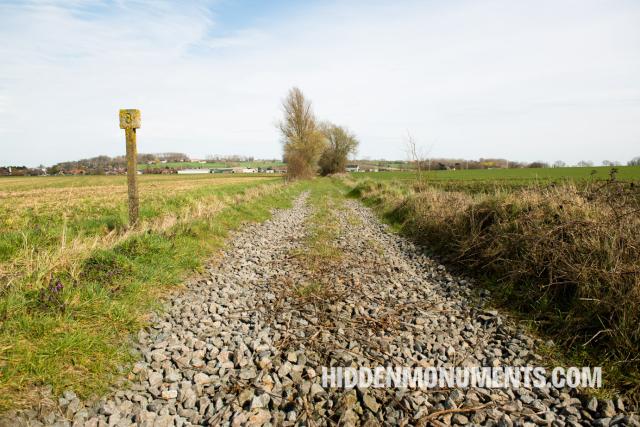
The Koppenberg in the Flemish Ardennes is not only the setting of the Tour of Flanders but also forms the background of railway line 85 between Leupegem and Herseaux near the French border.

The ten-kilometre-long railway line 102 cut through the Borinage and connected several coal mines between Saint-Ghislain and Frameries.

The former grandeur of Charleroi still resonates in Art Deco buildings and modernist gems such as the colourful newspaper kiosk by architect Léon Coton.

Unlike the Belgian cities of Liège, Antwerp, Ghent or Brussels, Charleroi never hosted a World Fair. Therefore, the smaller-scale Universal Exhibition of Charleroi in 1911 was no less ambitious.
Get the latest stories straight to your inbox
Latest from the blog

On the occasion of International Art Nouveau Day, celebrated each year on June 10, a look at how this ornate architectural movement found its way into the most unlikely of places like coal mines, power stations, and railway yards and the long, sometimes heartbreaking battles to save what remains.
All photos and stories are copyrighted. Of course, linking to articles on the site is possible and allowed.
If you would like to use photos or articles from this website, please contact bart@hiddenmonuments.com.
© 2003-2026 Hiddenmonuments.com