
Aachen
In the run-up to the Second World War, Adolf Hitler ordered the construction of a defense line in the west of the country, the so-called West Wall. You will still find hundreds of meters of tank barriers in Aachen, Germany.
Explore over 600 destinations previously published in the archive. Premium members unlock the full story for each destination, GPS coordinates, addresses, heritage maps, and tips for legal visits.
In the run-up to the Second World War, Adolf Hitler ordered the construction of a defense line in the west of the country, the so-called West Wall. You will still find hundreds of meters of tank barriers in Aachen, Germany.

The monastic ruins of Tintern Abbey rest on the banks of the Wye in Wales. Like the abbey of Villers-la-Ville in Belgium, Tintern Abbey was populated by monks of the Cistercian Order.
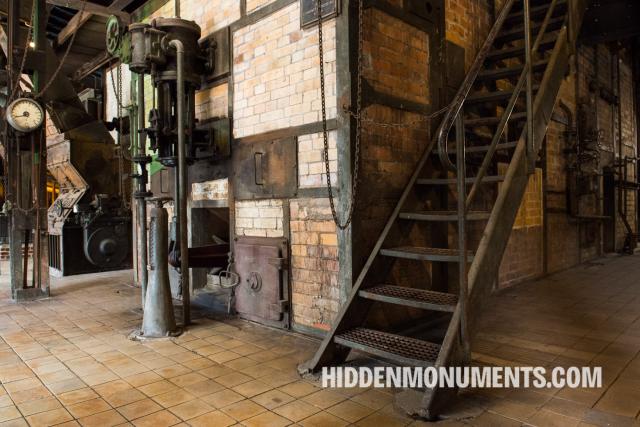
In the Herzberge landscape park, a green oasis in Berlin's Lichtenberg district, the Queen Elisabeth evangelical hospital was built at the end of the nineteenth century and was heated from a separate boiler room.

In 1837, August Borsig set up a workshop on Chausseestraße in Berlin. He assembled his first locomotive three years later, the first of many.

Karlshorst not only has a former airport in store but also a vanished zeppelin shed and a railway yard that has been transformed into a landscape park.


In Peenemünde, Germany, the Nazi rocket testing center, a coal-fired power plant was established in 1939 to enable the energy-intensive production of liquid oxygen - the fuel for the V2 rocket.

Until the eleventh century, Duisburg was located directly on the Rhine, but after the river's course changed, the Hanseatic city lost its most important asset. Traders left, and Duisburg was taken over by farmers and monks.

In 1911, the St. Pauli-Elbtunnel was the technical sensation of the moment because it was the first substantial underwater tunnel on the European mainland.
Get the latest stories straight to your inbox
Latest from the blog

On the occasion of International Art Nouveau Day, celebrated each year on June 10, a look at how this ornate architectural movement found its way into the most unlikely of places like coal mines, power stations, and railway yards and the long, sometimes heartbreaking battles to save what remains.
All photos and stories are copyrighted. Of course, linking to articles on the site is possible and allowed.
If you would like to use photos or articles from this website, please contact bart@hiddenmonuments.com.
© 2003-2026 Hiddenmonuments.com