
Brandenburg
Although you could once commute from Mittenwalde Ost station to Berlin and Zossen, the locomotives are only now making an appearance.
Join us on a travel trip to hidden gems in Germany: a deep dive into Germany's rich history through its landmarks and World Heritage monuments.
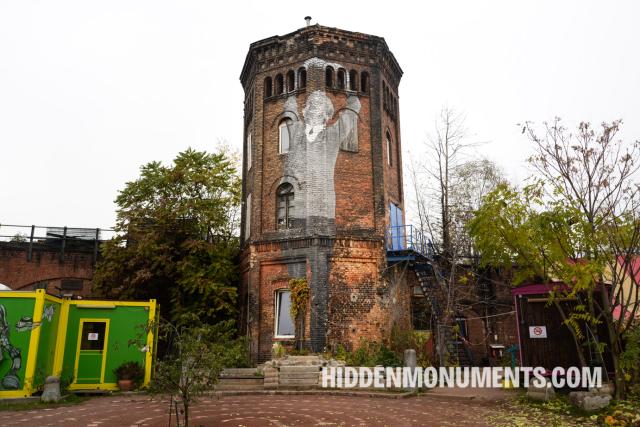
A stone's throw from Ostbahnhof station in the German capital, Berlin, you will come across this brick water tower from 1880.


The most original form of public transport can be found in the German city of Wuppertal. The Schwebebahn has been floating above the Wupper River for over a hundred years.

Like the capital, Berlin, the German port city of Hamburg was fortified with two concrete Flak Towers ('Flaktürme' in German) between 1942 and 1944.
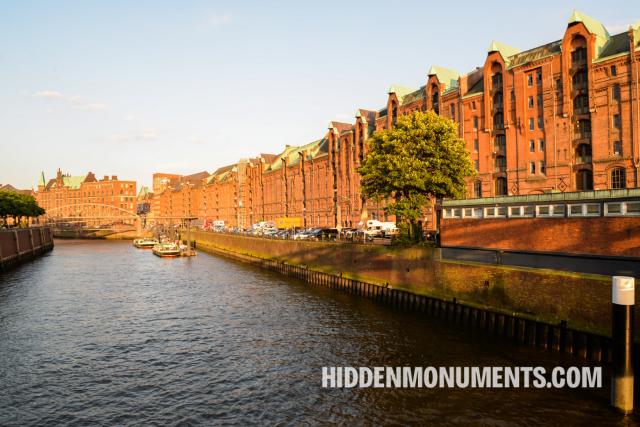
In the German port city of Hamburg, a complex of neo-Gothic brick warehouses, the Speicherstadt, was built on islands in the Elbe between 1883 and 1927.

On the night of April 25 to 26, 1940, the British Royal Air Force bombed the German capital Berlin. For Nazi leader Adolf Hitler, it was unpalatable to have bombs hit the capital of his Third Reich.

In the run-up to the Second World War, Adolf Hitler ordered the construction of a defense line in the west of the country, the so-called West Wall. You will still find hundreds of meters of tank barriers in Aachen, Germany.
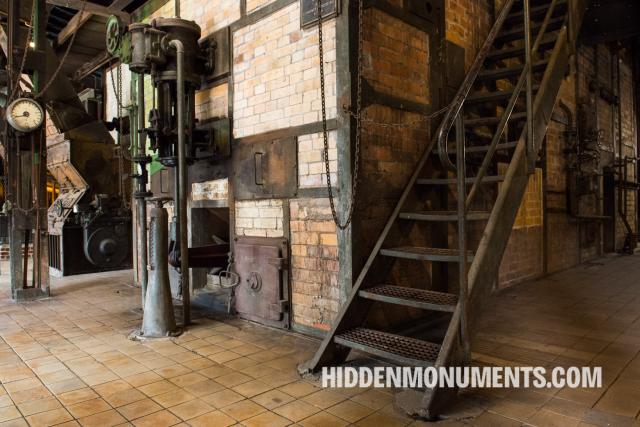
In the Herzberge landscape park, a green oasis in Berlin's Lichtenberg district, the Queen Elisabeth evangelical hospital was built at the end of the nineteenth century and was heated from a separate boiler room.
Get the latest stories straight to your inbox
Latest from the blog

On the occasion of International Art Nouveau Day, celebrated each year on June 10, a look at how this ornate architectural movement found its way into the most unlikely of places like coal mines, power stations, and railway yards and the long, sometimes heartbreaking battles to save what remains.
All photos and stories are copyrighted. Of course, linking to articles on the site is possible and allowed.
If you would like to use photos or articles from this website, please contact bart@hiddenmonuments.com.
© 2003-2026 Hiddenmonuments.com